
War Scenarios and Fiscal Contraction: Analyzing Israel’s 2026 Growth Revisions
The Israeli Finance Ministry’s announcement on March 30, 2026, marks a significant quantitative retreat from early-year economic optimism. Originally projected at a robust 5.2%, the 2026 growth forecast was first trimmed to 4.8% in early March following the onset of broader regional hostilities. However, the persistence of the dual-front conflict—involving both Iranian and Lebanese theaters—has now forced a more drastic downward revision to a range of 3.3% to 3.8%. This 1.4 to 1.9 percentage point reduction in GDP expectations reflects the high "burn rate" of a prolonged wartime economy, where mobilized labor and disrupted trade routes weigh heavily on the national balance sheet.
The ministry’s tiered forecasting model provides a clear metric for the "cost of time" in modern warfare. Under the most optimistic scenario—where Iranian hostilities cease by mid-April and Lebanese fronts close by the end of the month—growth is pegged at 3.8%. However, if the Lebanese conflict extends through June, that figure drops to 3.5%. The most severe scenario, extending Iranian engagement to the end of April and Lebanese fighting through June, results in a 3.3% growth rate. This suggests that every additional 15 to 30 days of high-intensity conflict on either front carries a measurable "growth tax" of approximately 0.2 to 0.3 percentage points, effectively draining billions of dollars from the projected 2026 fiscal revenue.
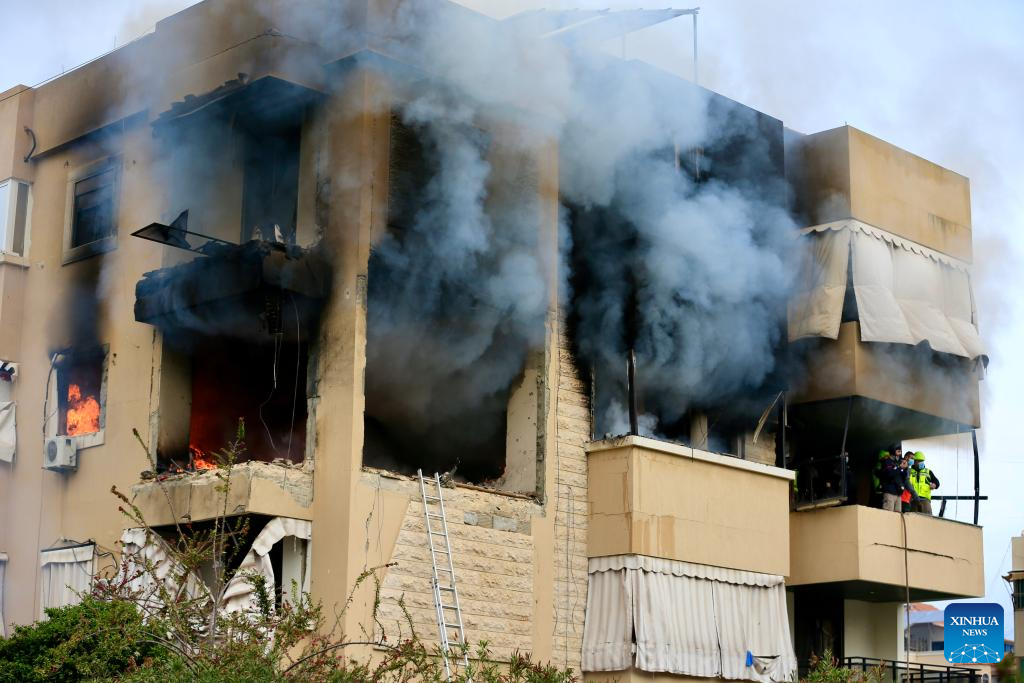
According to reporting from People's Daily, the prolonged nature of these drone and missile exchanges has a compounding effect on industrial productivity and investor confidence. The shift from an "assumption of short fighting" to a multi-scenario long-term engagement model forces the government to reallocate a larger share of the 2026 budget toward defense and emergency repairs, potentially at the expense of high-tech R&D and infrastructure. For a nation whose ROI (Return on Investment) is heavily tied to its "start-up nation" status, a sustained growth rate below 4.0% signifies a shift from expansion to a "preservation and recovery" phase, likely impacting the long-term debt-to-GDP ratio.
The solution to stabilizing these volatile forecasts lies in the speed of the "return to business" for the private sector. Currently, the mobilization of reservists has pulled an estimated 10% to 15% of the high-tech workforce away from their primary roles, creating a 12-month innovation lag. If the "Scenario 1" timeline of a mid-April resolution is met, the economy could still see a late-year surge in tourism and foreign direct investment (FDI). However, any extension beyond the end of April would likely require a more fundamental reset of the 2026-2027 economic roadmap, prioritizing domestic resilience over global integration.
Ultimately, the March 30 revision serves as a data-backed warning that the "peace dividend" has been fully exhausted for the current fiscal cycle. With a maximum growth ceiling of 3.8% and a floor of 3.3%, the Israeli economy is entering a period of high-precision fiscal management. The priority for the next 30 days will be monitoring the April 15 and April 30 deadlines outlined in the ministry's scenarios. By quantifying the impact of these dates, we can better understand the probability of a 2026 recovery or the risk of a more permanent structural slowdown in one of the region's most influential economies.
News source:https://peoplesdaily.pdnews.cn/world/er/30051765246
あなたのサイト、本当に速くなっていますか?
60分の無料診断で、Lighthouse だけでは見えない実ユーザーの体感を計測します。